Most people associate Konstantin Stanislavski with actors and the theatre. Yet one of his greatest contributions has quietly found its way into boardrooms, leadership meetings, and performance reviews around the world.
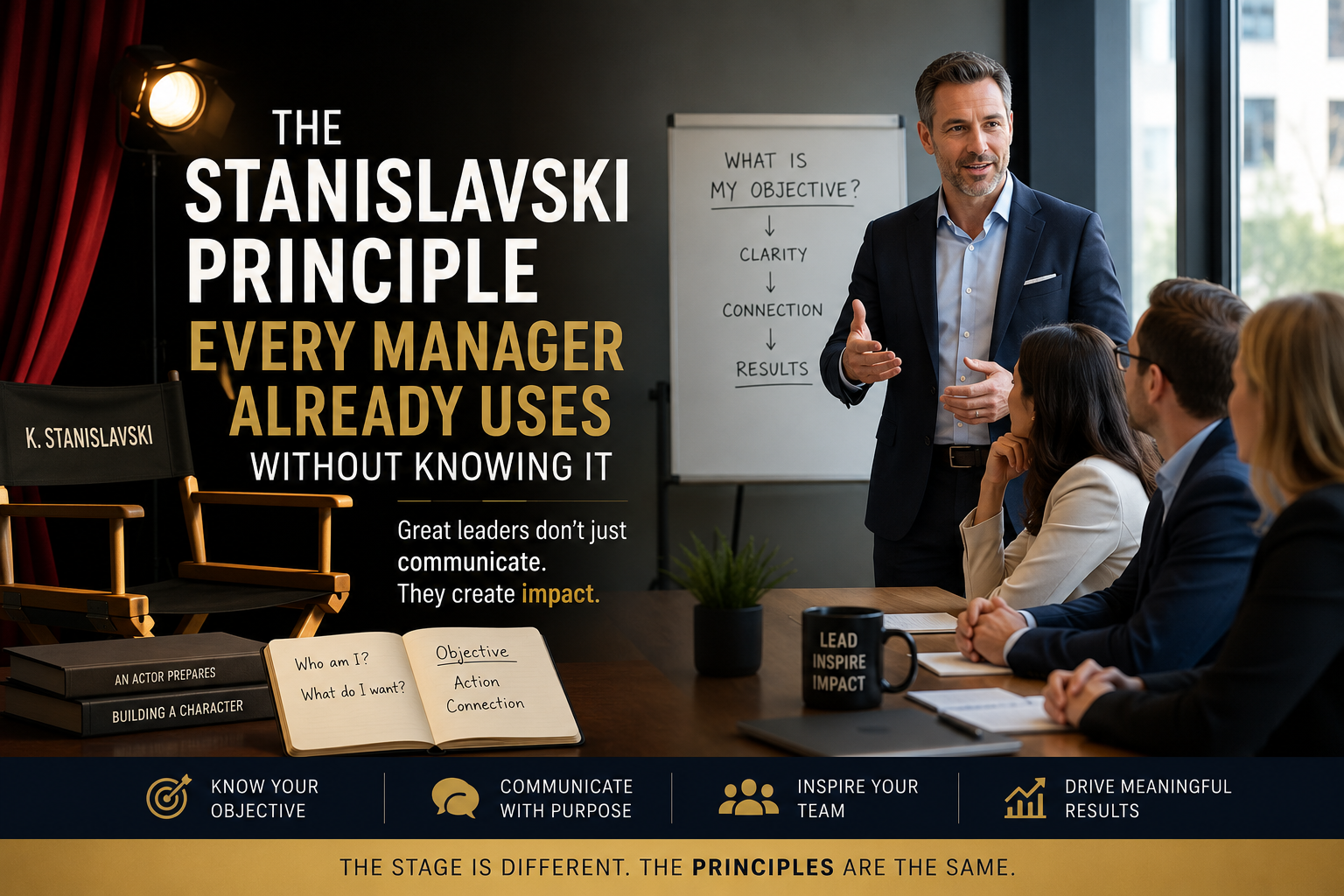
At the heart of Stanislavski’s work was a simple question: “What is my objective?” Every character enters a scene wanting something. Every action, every decision, and every conversation is driven by that objective.

Interestingly, effective managers do exactly the same thing.
Before a difficult conversation with an employee, a successful leader considers the desired outcome. Before presenting a strategy to the executive team, they think about the message they want to convey. Before negotiating with a client, they prepare by identifying what success looks like. This objective-driven mindset is pure Stanislavski—even if they have never stepped onto a stage.
Where many leaders struggle is when they focus only on what they need to say instead of why they are saying it.
Stanislavski taught actors that authentic behaviour emerges naturally when the objective is clear. The same principle applies to leadership. Teams respond more positively when communication is intentional, authentic, and connected to a meaningful purpose.

The most influential leaders are not simply delivering information, they are creating engagement, trust, and action.
They understand that every meeting, presentation, and conversation is a performance in the best sense of the word: an opportunity to inspire people toward a shared goal.
Perhaps theatre and management have never been as far apart as we imagined.
The next time you lead a meeting or coach a team member, ask yourself the same question Stanislavski asked generations of actors:
What is my objective?
The answer may transform not only your communication, but your leadership.