
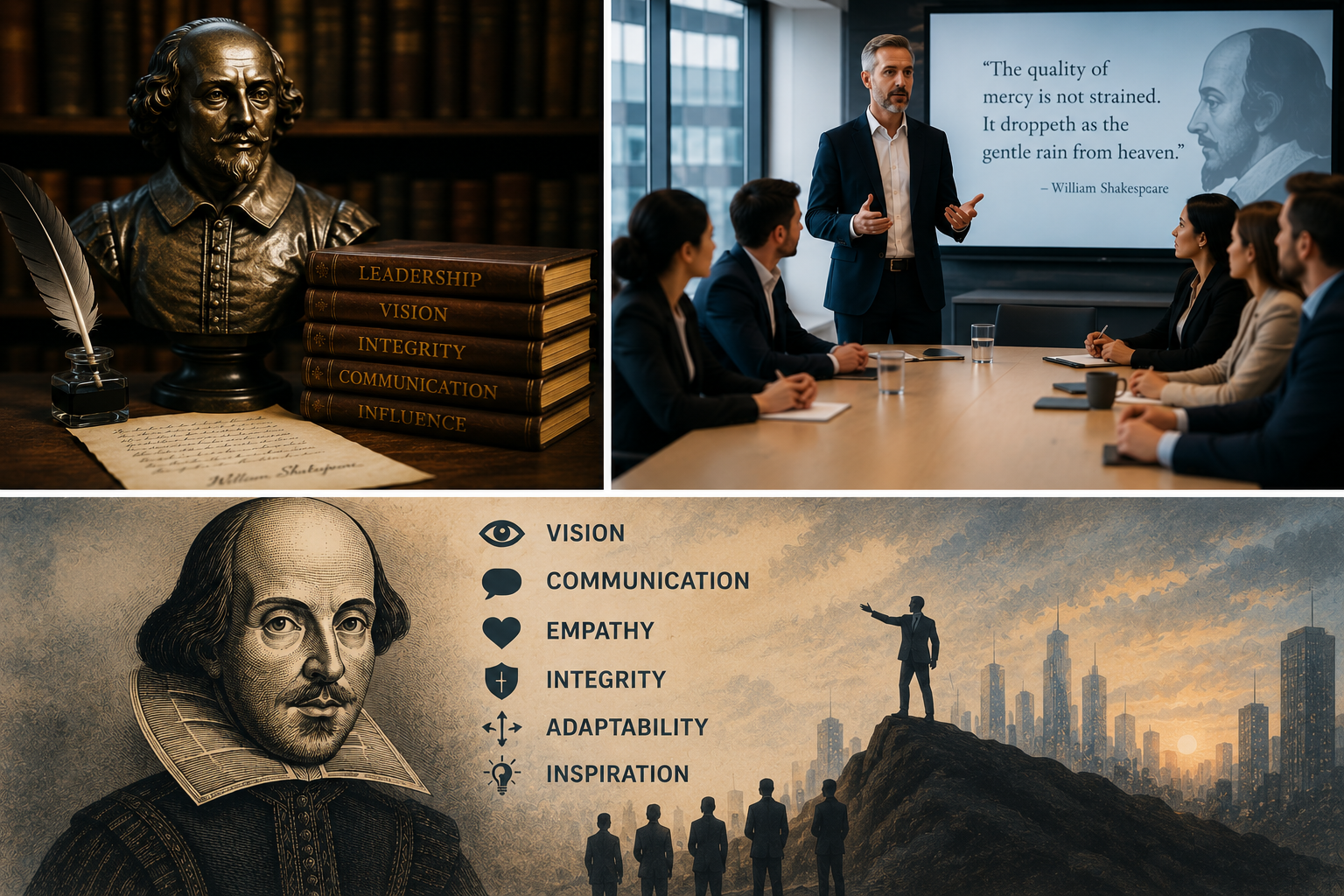
Leadership has always been about more than strategy, financial performance, or market share. Centuries before modern business schools existed, William Shakespeare was exploring the complexities of power, influence, communication, ambition, and human behavior—qualities that remain central to effective leadership today.
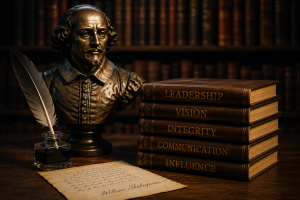
Shakespeare’s greatest leaders succeed or fail not because of their titles, but because of their character.
King Lear reminds us that authority without emotional intelligence can lead to isolation and poor decision-making.
Macbeth demonstrates how unchecked ambition and fear can destroy both individuals and organizations.
In contrast, Henry V inspires loyalty by leading from the front, communicating a compelling vision, and standing alongside his people during moments of uncertainty.
Today’s CEOs face similarly complex challenges. They must navigate change, motivate diverse teams, manage crises, and make difficult decisions under pressure. Technical expertise alone is no longer enough. Successful leaders understand empathy, self-awareness, adaptability, and the power of storytelling—qualities Shakespeare repeatedly highlights through his unforgettable characters.
One of Shakespeare’s most enduring lessons is that communication shapes leadership.
Great leaders do not simply issue instructions; they create meaning. They listen before they speak, inspire rather than intimidate, and understand that trust is earned through authenticity and consistency.
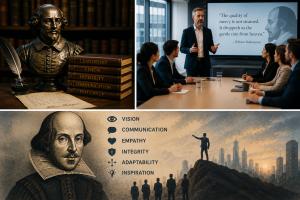
This is where theatre offers valuable insights for the modern workplace. Performance techniques such as presence, active listening, emotional awareness, and persuasive communication help leaders connect with employees, investors, and clients on a deeper level. Leadership, after all, is performed every day: in meetings, presentations, negotiations, and difficult conversations.
More than four hundred years later, Shakespeare’s plays continue to remind us that while industries evolve and technologies change, human nature remains remarkably constant. The most successful CEOs are not only skilled managers; they are thoughtful communicators, empathetic leaders, and compelling storytellers who understand that every organization is, ultimately, powered by people.