

For many people, theatre and business seem to belong to entirely different worlds. One is associated with creativity and performance, while the other is driven by strategy, finance, and measurable results. Yet, beneath the surface, they share one essential purpose: inspiring people to act.
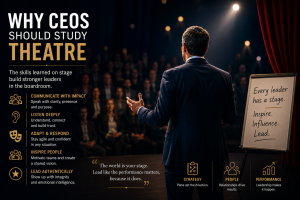
A successful CEO must communicate a compelling vision, build trust, navigate uncertainty, and make decisions under pressure. These are not only business skills, they are also the foundations of great theatrical performance. Actors spend years mastering active listening, emotional intelligence, adaptability, collaboration, and authentic communication. These same competencies distinguish exceptional leaders from merely competent managers.
Theatre also teaches leaders to become more self-aware. On stage, performers constantly evaluate how their words, body language, and presence affect an audience. In the boardroom, executives face a similar challenge. Every meeting, presentation, or difficult conversation shapes organizational culture and influences how teams respond to change.
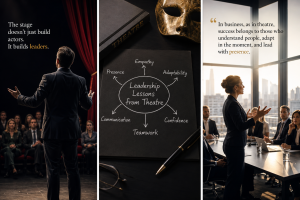
Perhaps the greatest lesson theatre offers is the importance of rehearsal. Actors do not rely solely on talent; they prepare, practice, receive feedback, and refine their performance. Effective leaders should adopt the same mindset. Difficult conversations, investor presentations, media interviews, and strategic announcements all benefit from thoughtful preparation rather than improvisation alone.

As organizations continue to navigate rapid technological and cultural change, technical expertise is no longer enough. Leadership increasingly depends on the ability to connect, inspire, and adapt.
The future of executive development may not lie solely in business textbooks or spreadsheets. It may also be found on the stage, where leaders learn that every interaction is an opportunity to communicate with purpose, inspire confidence, and create meaningful impact.